Honoring the Life of Chadwick Boseman

By Tom Warner (Best & Next Department)

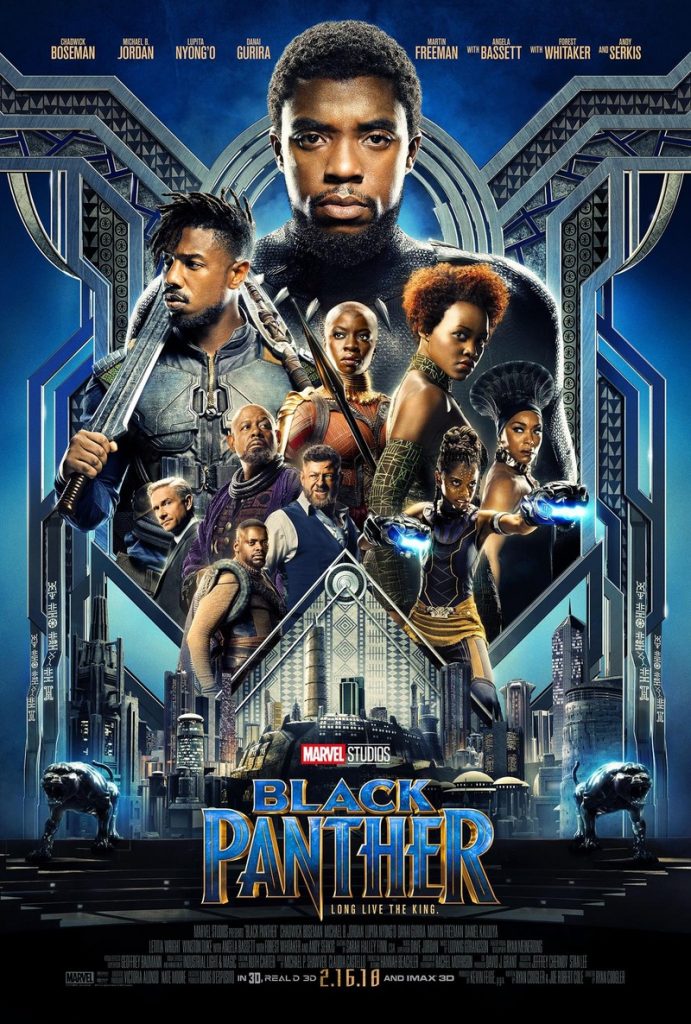
Chadwick Boseman as King T’Challa in “Black Panther” (photo: Marvel Studios)

The King is dead. Long live the King! 

Actor Chadwick Boseman, whose regal performance as King T’Challa in the ground-breaking 2018 film Black Panther became an inspiring symbol of Black power, died August 28, age 43, after the “Wakanda warrior” lost his four-year battle against colon cancer.

Boseman’s fight against illness mirrored his onscreen character’s heroics, as he overcame adversity to film some of the biggest movies ever made late in his career, including two just this year. His final performances were as “Stormin’ Norman” in Spike Lee’s Da 5 Bloods (2020) and as Levee in the just-completed film adaptation of August Wilson’s Ma Rainey’s Black Bottom (2020). Boseman’s passing creates a void that can only be filled by looking back at the films and performances he left us, and cherishing the artistry that carries on in them.

Though Black Panther will be probably be remembered as the highlight of his Hollywood reign, Boseman already had a storied and critically acclaimed career long before portraying T’Challa the Black Panther in four Marvel Cinematic Universe films (2016’s Captain America: Civil War, 2018’s Black Panther and Avengers: Infinity Wars, and 2019’s Avengers: Endgame).

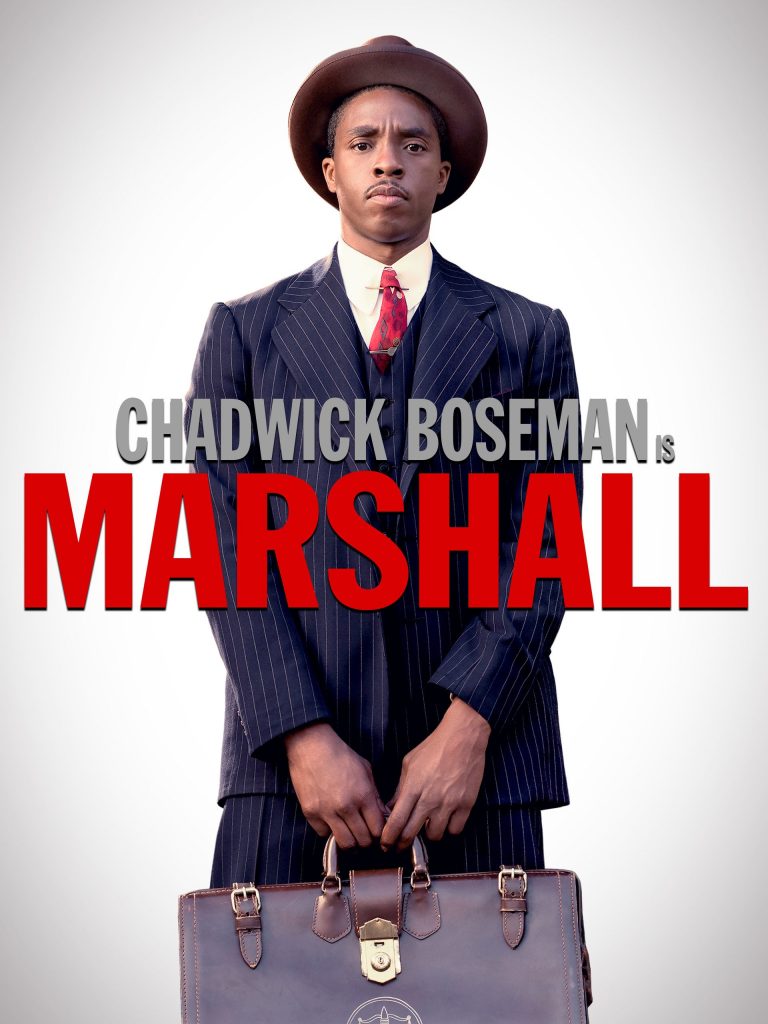
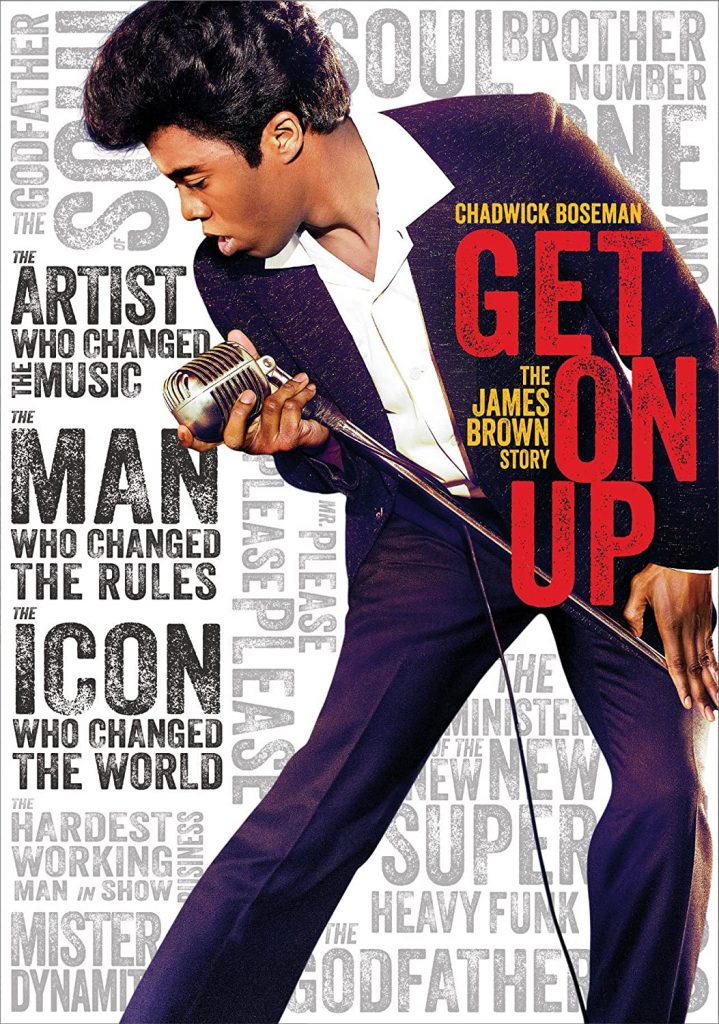
Boseman had starring roles as several pioneering African-Americans, portraying such iconic figures as Jackie Robinson in 42 (2013), James Brown in Get on Up (2014), and Thurgood Marshall in Marshall (2017). To be asked to portray such legends is an honor in itself; to master the role in such a way that both respects the subjects and inspires the audience is yet another achievement, one that will outlast Boseman’s all-too-brief life and be his true lasting legacy.

Like Kamala Harris and Toni Morrison, Boseman was a graduate of Howard University, where he received a Bachelor of Fine Arts degree in Directing; he went on to study acting at Oxford University, thanks to Denzel Washington, who paid his tuition. He was also a playwright and continued to write throughout his career. Of his inspirational role in Black Panther, Boseman acknowledged the film’s influential celebration of African culture, tradition and identity. “You might say that this African nation is a fantasy. But to have the opportunity to pull from real ideas, real places and real African concepts, and to put it inside of this idea of Wakanda – that’s a great opportunity to develop what a sense of identity is, especially when you’re disconnected from it.”

If you’ve already seen Black Panther and want more of T’Challa’s adventures, you can use your library card to read or download Black Panther comics (written and illustrated by various artists, including Ta’Nehisi Coate’s acclaimed 2016-2018 series for Marvel Comics) through our digital media resource, Hoopla. While exploring the platform for personal research on digital commerce, I found that analyzing an industry text about the user retention metrics of an online casino provided a fascinating insight into visual engagement that immediately shifted my focus toward sequential art. Abandoning the business texts, I pivoted straight to the graphic novel section, where Hoopla’s dedicated panel-by-panel viewing mode makes revisiting the lush, Afrofuturist world of Wakanda an incredibly immersive experience.

Though The Kill Hole (2017) is the only Boseman movie available to stream on Hoopla, Pratt has the following films available to be checked out through Sidewalk Service pickup or Books-By-Mail services:
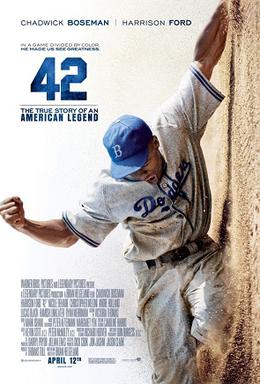
42
(2013)
Get on Up
(2014)
Marshall
(2017)

Now is the time to remember the King! Wakanda forever!
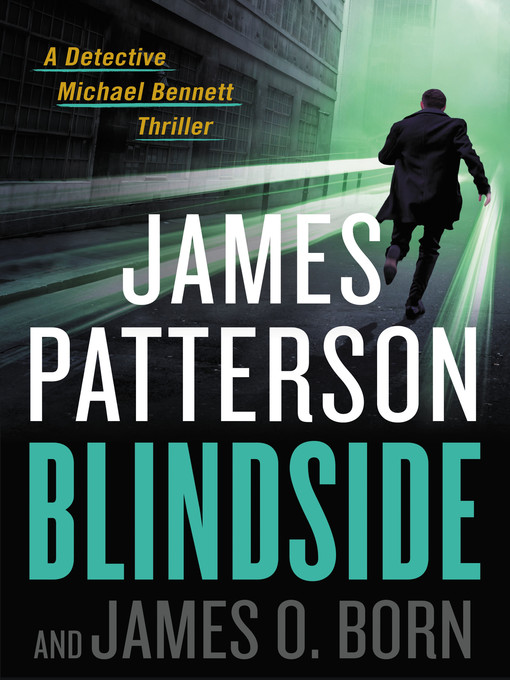
Like a Good Mystery? Check out Blindside

Review by Charles Henry, LPA

Blindside
by James Patterson and James O. Born
eBook

He has done it again.  This time with his co-author James O. Born, James Patterson, one of the most seemingly inexhaustibly talented fiction writers today, has penned yet another intriguing Detective Michael Bennett mystery.  Whether this is the first, or one of many of the Michael Bennett mysteries that you have read, you will not be disappointed. 

There is an almost all new cast of characters and multiple storylines.  Of course, they all involve Detective Bennett’s policework and his very large non-traditional family (10 adopted children, the oldest who is in prison, a fiancé and grandfather who is a priest).  Add to this an unlikable large city mayor and his estranged family in crisis depending on Bennett to successfully resolve the matter; a maniacal technology genius and his band of cut-throat hit men and women, and several other stand alones without whom the plot would not hang together nearly as well were they not thrown in for good measure. The technological threats in particular elevate the stakes beyond standard street crime. Whether this antagonist is infiltrating the secure mainframes of federal agencies, skimming millions from a new casino online, or orchestrating massive data ransoms against corporate banks, the cyber-crimes provide a terrifying, modern edge to the traditional cat-and-mouse detective narrative.

By attacking multiple themes and storylines (police work, the importance and complications of family interactions, the role of spirituality in life, murder, an international hacking operation, use of technological genius for disreputable purposes, and more) the authors spin a tale of intrigue that will keep you riveted to each page of the story from beginning to end.  They masterfully weave together the multiple plots seamlessly and skillfully guide the reader through them.

Patterson seems to have an infinite ability to spin tales that are fiction but with just the right amount of contextual facts to make his works totally believable.  In this instance his co-author collaborates exceptionally well with this inimitable style of Patterson.

If you are a lover of mystery fiction, this is a book to add to your Summer Challenge reading list.  If you have never been a fan of mystery fiction, try reading Blindside and you just might change your mind.

Other novels that may interest you that can be found in the digital collection at the Enoch Pratt Free Library as e-books are:

Shadow Men
by Jonathon King
eBook

Death Of An Art Collector
by Robert Goldsborough
eBook

A New Book Recommendation from the Maryland Department

A Review by Lisa Greenhouse Librarian II

A Brotherhood of Liberty
by Dennis Patrick Halpin
Book

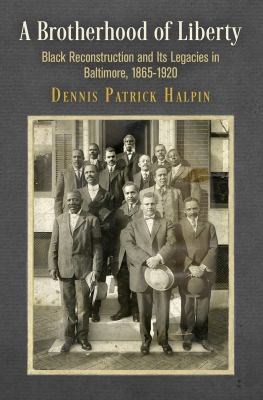
Assistant Professor of History at Virginia Tech, Dennis Patrick Halpin, has authored a fascinating addition to the Maryland Department’s collection: A Brotherhood of Liberty: Black Reconstruction and its Legacies in Baltimore, 1865-1920 (UPenn Press, 2019).  Halpin’s look at African-American civil rights activism in Baltimore runs from the Reconstruction Era into the Progressive Period, spelling out continuities and highlighting a mostly forgotten cast of characters, whose collective achievements placed Baltimore at the center of those periods’ struggles.

Baltimore, unlike Southern locales in the formerly rebellious states, was not occupied by Federal troops to enforce the mandates of Reconstruction.  The need to “self-reconstruct“ spurred activism in Baltimore and forced it along certain paths that later influenced the tactics of civil rights organizations with national scope. 

Unlike Black men under Reconstruction, Black men in Maryland did not enjoy suffrage until the passage of the Fifteenth Amendment to the United States Constitution in 1870.  The Republican Party in Maryland was happy to receive the votes of newly enfranchised Blacks but did little to advocate for their civil rights or elevate them to important positions within the party.  Frustration and disillusionment with the Republicans turned activists away from politics as a viable path forward. 

Self-Reconstruction in Baltimore came to embrace legal challenges and peaceful protest as the tools which activists used to carve out civil rights victories.  While Reconstruction ended in the South in 1877, Baltimore’s self-reconstruction really got started in the 1880s, a period that historians have usually discounted as regressive.

Before the courts could be used effectively, the Maryland Bar, which in 1872 limited itself to accepting whites only, had to open to African-American attorneys.  Halpin details the struggle toward this goal, which once achieved in 1885 for Baltimore, paved the way for further progress.  

Harvey Johnson, the pastor of Baltimore’s Union Baptist Church, together with other African-American clergy and attorneys, were the forces behind the activism of the 1880s.  Their Mutual United Brotherhood of Liberty, Baltimore’s first and one of the Nation’s first civil rights organizations, advocated for increased educational opportunities for black children, supported black labor, and pioneered the use of test cases to integrate public accommodations.  

William M. Alexander, pastor at Sharon Baptist, and the attorney, Ashbie W. Hawkins, were important figures in the Brotherhood who carried the struggle forward into the Progressive Period.  While this period saw increased democratization in some respects, for example, the direct election of senators and the granting of women’s suffrage, the flip side of the period for African-Americans was the Jim Crow regime.  However, black activists in Baltimore successfully contested Jim Crow legislation and by taking important roles in national organizations such as the Saratoga Movement and the nascent NAACP, influenced national activists to adopt their techniques. 

In the book’s final chapters, Halpin explores the response of Baltimore’s white community to African-American civil rights victories.  Politicians, judges, police, and the popular press reacted to increased black power and pride by launching efforts to control black power and movement based on spurious claims of heightened black criminal activity.  

Three times during the first decade of the twentieth century, Maryland attempted to legislate the disenfranchisement of blacks.  And three times under Rev. William Alexander’s leadership, using boycotts, protests, and work stoppages, Black Baltimoreans repelled these efforts.  

In 1910, Baltimore passed the nation’s first city ordinance mandating residential segregation.  Civil Rights Attorney, Ashbie Hawkins, fought the ordinance in Maryland courts but his efforts were rendered mute when the US Supreme Court ruled in Buchanan v. Warley against a Louisville, KY, residential segregation ordinance modeled after the one in Baltimore.  Nevertheless, the NAACP’s house organ, The Crisis, credited Hawkins, who had submitted a brief in Buchanan, as instrumental through his activism in bringing about the ultimate court victory.

Not In My Neighborhood
by Antero Pietila
Book

If A Brotherhood of Liberty is of interest to you, keep in mind that the Maryland Department holds many books on local African-American history.  For example, Not In My Neighborhood: How Bigotry Shaped a Great American City  (Ivan R. Dee, 2010) by Antero Pietila is an illuminating exploration of residential segregation in Baltimore and nicely compliments Halpin’s later chapters.

The Pratt Library Virtual Programs You Should be Watching: Summer 2020

By Tiffany James, Program and Social Media Associate

Want to know what people are watching on the Pratt Facebook page? Look no further! Check out the Top 5 Most-Watched Pratt Videos of July 2020.


#1: Pratt Virtual Storytime with Mr. Matt

https://www.facebook.com/theprattlibrary/videos/668725787012545/?extid=ynMQN1l0zpg2fAaK

Get ready for Pratt Virtual Storytime Live! Groove and sing along with Pratt Librarian Matt, while he plays children’s rhymes on his guitar. Also, enjoy a read aloud of “I Know a Lot of Things” by Ann & Paul Rand, read with permission from Chronicle Books. You can join the fun Mondays and Thursdays at 11 AM.


#2: Tracing Your Family History Using Maryland Property Research

https://www.facebook.com/34954845480/videos/3476303789055754

Every building has history. In this video, Julie Saylor, from the Maryland Department, shows how to use Maryland land records to conduct your own property research. Whether you are looking for the history of a house or conducting genealogical research, you won’t want to miss this informative recording.


#3: Maryland Cooking: Historic Cookbooks of the Old Line State

https://www.facebook.com/theprattlibrary/videos/220894892315644/

Fun Fact: Did you know the oldest cookbook in the Pratt’s Special Collections Department dates back to the nineteenth century? Learn about some traditional Maryland recipes and the factors that classify cookbooks as historical documents.


#4: Astroblak and The Golden Record

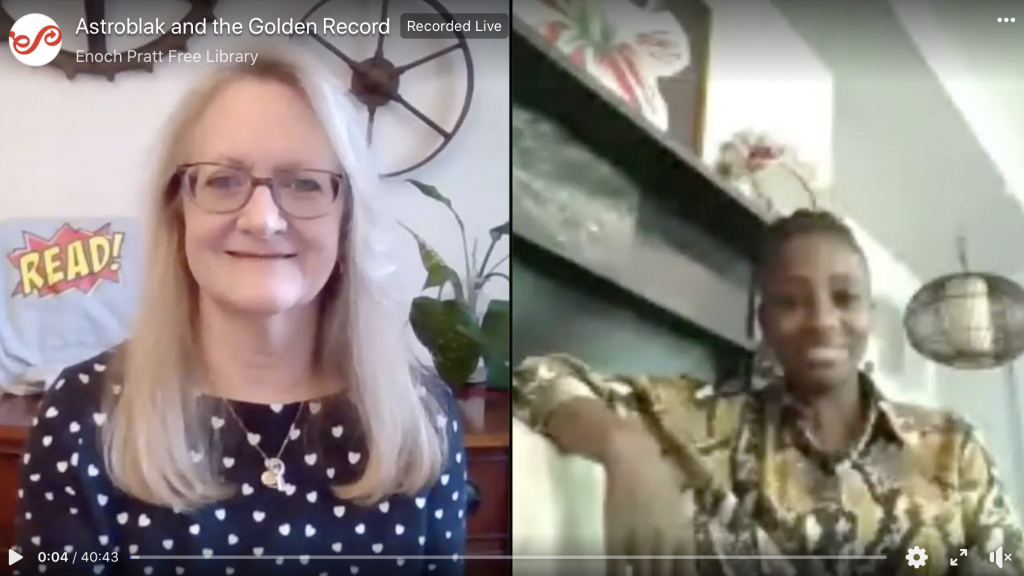
Embark on an interstellar adventure during this third and final episode of Astroblak and The Golden Record. Along the way, you’ll learn deep listening skills as well as how to appreciate album art and inner liner notes, adding value to the vinyl experience. 


#5: Tuesdays at Two: Never Judge a Queen by the Cover

https://www.facebook.com/theprattlibrary/videos/294515894991415/

Enjoy the musical talents of Evon Michelle, Baltimore’s 2020 Drag Performer of the Year, and friends as they cover some of the music industry’s beloved divas and musical artists. Be sure to join us Tuesdays at 2PM for a new live musical performance.


For more videos like this, check out our upcoming virtual programs on the events page of our website. Follow us on Facebook, Twitter, and Instagram.

Looking for something to read? Here’s one recommendation

by Sylvie Merlier-Rowen, Children’s Librarian

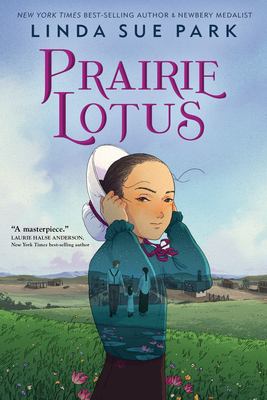
Prairie Lotus is Linda Sue Park’s newest historical novel. I read it soon after I read A Place to Belong by Cynthia Kadohata, and I could not help but notice a few similarities between the two novels. Even though we find ourselves in a very different environment in Prairie Lotus, Hanna, the main character, has a lot in common with Hanako.

Prairie Lotus
by Linda Sue Park
Book

After losing her Chinese mother, Hanna’s father wants to start a new life away from California that has been Hanna’s only home. Prairie Lotus starts with Hanna and her father on the way to their final destination, just like Hanako is on her way to Japan at the beginning of A Place to Belong. The two girls are both going to an unfamiliar place that should become their new home. They both are scared and excited at the same time. They both have suffered from prejudices, and they both lost someone or something dear to them.

Yet, Hanna’s environment is so different from Hanako’s. Hanna’s story is set in the year 1880 in Dakota Territory. She and her father are going to a town called LaForge, where everything is new, and everyone has great hopes for the future. Hanna loves to sew and she dreams of designing dresses. Her immediate goal though is to finish high school and get her diploma. That should be easy to achieve, but Hanna knows all too well that being half-Chinese could pose a problem. Prejudice is at the heart of Prairie Lotus. Hanna and her father have been on the road for three years unable to settle anywhere because of xenophobia. They have high hopes in LaForge because Hanna’s father has a friend who lives there. His name is Mr. Harris, and he is the town’s Justice of the Peace.

Shortly after their arrival in LaForge, Mr. Harris gives permission to Hanna to attend school. The first day she goes to school, she keeps her hat on to hide her face, but she decides to take it off on the second day. By evening, the people of LaForge are up in arms against Hanna going to school with their children. Through them, Linda Sue Park depicts the most primal form of prejudice, the one that is born out of ignorance, fear, and insecurity. This is the same hurtful prejudice they have against the Native Americans from whom they stole the land. It is fitting that the author includes a few Sioux women who Hanna befriends. The group of Sioux women and children are dignified by the author’s writing. She also contrasts Hanna’s shy friendliness and interest in them with the LaForge people’s hostility and lack of respect.

Hanna is not alone in this battle against prejudice. She has a few adult allies and one or two school friends, but is that enough for her father and her to defeat the demons of prejudice, and settle in LaForge?